Custom orthotics for foot pain, alignment, and lower body support
Your feet are the foundation for how you stand, walk, run, and move. When your foot mechanics are not well supported, stress can build through the feet, ankles, knees, hips, or lower back.
Custom orthotics are designed to support your feet, improve alignment, and help your lower body move more efficiently. At Ness Physiotherapy in Winnipeg, our physiotherapists assess foot and lower extremity biomechanics to determine whether custom orthotics may help.
What are custom orthotics?
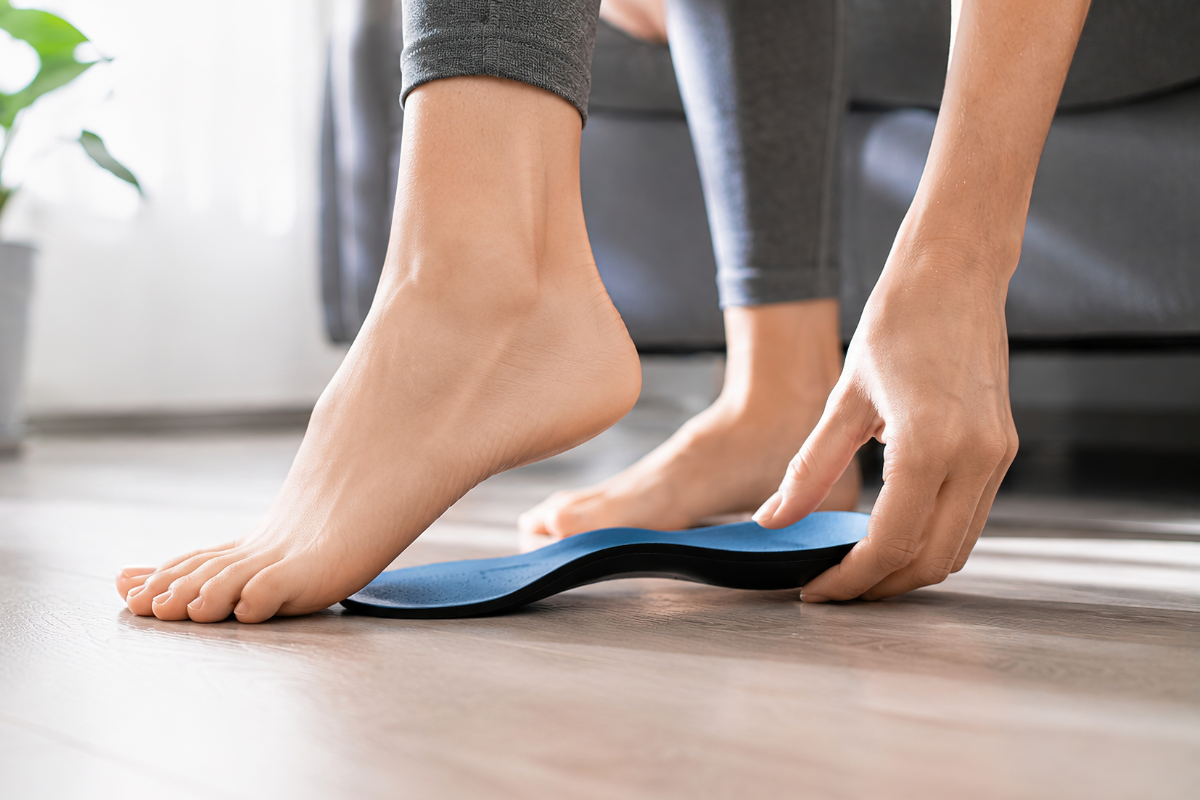
Custom orthotics are shoe inserts designed specifically for your feet and movement needs. Unlike over-the-counter insoles, custom orthotics are based on an assessment of your foot structure, lower extremity mechanics, and symptoms.
They are designed to help maintain a better position of the foot, improve comfort, and support more efficient movement during daily activity.
What symptoms may custom orthotics help with?
Custom orthotics may be helpful if you experience:
Low arches
Flat feet
Pronated feet
Heel pain
Bone spurs
Plantar fasciitis
Morning foot pain with your first few steps
Bunions or hallux valgus
Pain in the ball of the foot
Metatarsalgia
Foot fatigue
Lower extremity strain related to foot mechanics
Poor foot position can contribute to strain in other areas of the body. Supporting the foot properly may help reduce unnecessary stress through the ankle, knee, hip, or back.
How can custom orthotics help?
Custom orthotics may help:
Support the arch of the foot
Improve foot and lower limb alignment
Reduce stress on irritated tissues
Improve comfort while standing or walking
Support more efficient movement
Assist with propulsion during activity
Reduce strain caused by poor foot positioning
Support recovery from certain foot and lower extremity conditions
Orthotics are often one part of a larger treatment plan. Depending on your condition, your physiotherapist may also recommend stretching, strengthening, footwear changes, activity modification, or other treatment strategies.
What happens during an orthotics assessment?
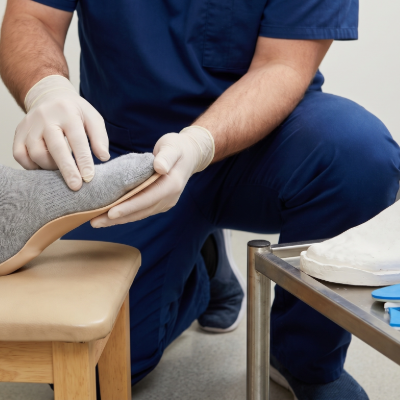
The orthotics process begins with a lower extremity assessment by a licensed physiotherapist. Your physiotherapist will assess your foot mechanics, alignment, symptoms, and movement patterns.
The process may include:
A lower extremity assessment
Evaluation of foot posture and biomechanics
Casting in plaster of Paris
Ordering a specific orthotic for your needs
Sending the casts to Paris Orthotics
Receiving your custom orthotics in approximately two to three weeks
Ness Physiotherapy uses Paris Orthotics because of their product quality and service.
Do custom orthotics replace physiotherapy?
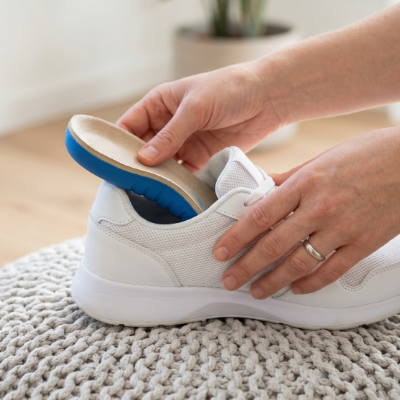
Not always. Orthotics may help support your foot position, but many conditions also benefit from exercise, mobility work, strengthening, education, and changes to daily habits or footwear.
For example, plantar fasciitis may respond best to a combination of orthotic support, calf mobility, foot strengthening, load management, and footwear guidance.
Frequently asked questions about custom orthotics
-
Yes. Custom orthotics are made specifically for your feet and biomechanics, while store-bought insoles are general products designed for a wider range of people.
-
After the assessment and casting process, custom orthotics are typically received in approximately two to three weeks.
-
In some cases, foot mechanics can contribute to strain higher up the body. Your physiotherapist can assess whether orthotics may be a helpful part of your treatment plan.
Book your custom orthotics assessment today
If foot pain, heel pain, or poor alignment is impacting your life, you don’t have to keep pushing through discomfort. Our custom orthotics services at Ness Physiotherapy are assessment-based, personalized, and tailored to your needs.
Call us at 204-953-1650 to take the first step toward better support.